 RE-ENERGY off-grid solar system Ballarat
Solar panels have come a long way, and that’s a big win for folks around Ballarat. These days, you can get high-efficiency panels that pump out more power without needing a huge roof. That’s handy in winter when the sun’s a bit shy. Whether you’re staying on the grid or going fully off-grid, modern panels handle shade better, don’t mind a bit of heat, and last for decades. Basically, the tech’s better, smarter, and made for places like ours where every watt counts.
Record-High Efficiency Panels
Solar panel technology keeps getting better. At the latest exhibition in China, most major manufacturers showcased modules hitting 24.5% to 25% efficiency — a big leap forward in real-world performance.

Aiko, one of the global leaders in solar innovation, stood out again with impressive results and cutting-edge cell technology pushing the limits of efficiency.
Better Shade Resistance
New panel designs are handling shade far better. Many companies showed live demos of how their panels keep producing under partial shading — a real win for rooftops with trees or chimneys.

Transparent and Flexible Solar
Innovation isn’t stopping at flat roofs. Transparent solar panels for windows and ultra-flexible modules for curved surfaces were also on display — opening doors for creative solar applications.


Hi Ballarat – New High-Power Solar Panels Are Here
If you’re looking at solar for your home or going off-grid, there’s something exciting worth checking out. AIKO has just launched their 3rd-generation INFINITE solar panels, and they’re packed with smart features perfect for Ballarat’s conditions.
What Makes Them Special?
- More Power Output
Thanks to AIKO’s new All Back Contact (ABC) design, these panels produce up to 40W more than most others—great when winter sun is limited. - Better Performance in Shade
These panels keep working even when partly shaded—generating up to 30% more energy than standard panels in the same conditions. - Sleek and Modern Look
Full-black, no grid lines—perfect if you want your solar array to look clean and sharp. - Built Tough
Dual-glass design means better protection from Ballarat’s cold mornings and hot summers, with less chance of micro-cracks or overheating.
Why It Matters for Off-Grid Living
Every bit of solar counts in an off-grid setup, especially during cloudy winters. The AIKO INFINITE panels offer high performance, reliability, and great looks—ideal for anyone planning a serious off-grid system.
Want to learn more or add them to your solar build? Get in touch with us at Re-Energy.
Latest Update in Solar Panel Efficiency
LONGi — one of the world’s largest solar manufacturers — has launched a new high-efficiency panel range called the EfcoLife Series, aimed at residential-scale applications including off-grid systems.
These panels use advanced Heterojunction Back Contact (HBC) technology, which combines two highly efficient solar cell designs into one. The result is a module efficiency of up to 25% and 510W output per panel — impressive figures, especially for systems where roof space is limited.
Key Details:
- Power output: up to 510W per panel
- Panel size: 1800 × 1134 × 30 mm
- Efficiency: up to 25%
- Low temperature loss: -0.24% per °C
- Durability: built to withstand snow, wind, and harsh weather
- Warranty: 30 years for both performance and materials
- Degradation: 1% in the first year, 0.35% annually after
The combination of high output and compact size makes these panels well-suited for off-grid homes, where maximising solar generation is essential — especially during Ballarat’s lower-sunlight winter months.
Availability in Australia is expected soon, and the EcoLife Series may become a strong option for those designing or upgrading remote power systems.
What’s the Deal with Bifacial Solar Panels – And Are They Worth It in Ballarat?
You’ve probably heard about bifacial solar panels – the new kids on the block that can produce power from both sides of the panel. Yep, they grab sunlight from the front and any reflected light from the back. That means more energy from the same panel size – pretty handy in places where land or roof space is limited.
So, what’s in it for us here in Ballarat?
How They Work
Bifacial solar panels have a clear back layer instead of the usual opaque one, letting light bounce in from underneath. If they’re mounted above reflective surfaces (like light-coloured gravel or concrete), they can generate 10–20% more power than regular panels. That’s a decent bonus, especially in open paddocks or elevated systems.
Where They Work Best
Bifacial panels shine (literally) when:
- They’re raised off the ground – like in a paddock or on a tilt-frame roof
- There’s reflective ground underneath – think concrete, gravel, or even white painted surfaces
- They’re used in carports, pergolas, or solar fences – so light can pass through and bounce around
They’re mostly used in big solar farms, but also make sense for rural installs, off-grid properties, or ground-mount systems where there’s room to play with the layout. On a typical Ballarat tiled roof though? You probably won’t see much extra gain unless it’s angled and well spaced.
Top Brands Making Them
Some of the world’s biggest solar players are all-in on bifacial tech:
- Trina Solar (Vertex range)
- JinkoSolar (Tiger Neo)
- LONGi Solar (Hi-MO series)
- Canadian Solar (BiHiKu)
- JA Solar (DeepBlue range)
These brands are all kicking goals with 600W+ panels and 22–23% efficiency on the front side, plus that handy boost from the back.
Price & Performance
Thanks to big competition and global oversupply, prices are at record lows:
- Wholesale prices are around $0.10–$0.15 per watt internationally
- In Australia (by the time they land, with shipping, GST, etc.), expect $0.25–$0.35 per watt depending on brand and volume
- Bifacial panels used to be pricier than standard ones, but now the gap’s basically gone
So for Ballarat locals doing off-grid, ground-mounted, or shed/carport installs, bifacial panels are well worth a look. If your setup’s right, you’ll get more power without needing more panels.
Bottom Line?
If you’re on acreage or planning a new solar system where you can lift the panels up and make use of reflective ground – bifacial panels could give you a solid edge. For tight roofs or flush-mounted installs in town, the gains might not be worth the extra effort.
But as prices drop and more systems go hybrid (solar + battery), it’s worth keeping bifacial tech on your radar.
Want help working out if they’re a fit for your place? Just give us a shout.
What Solar Panels Are People Actually Using?
Thinking about getting solar in Ballarat? You’ve probably seen all kinds of panel brands pop up—some well-known, some you’ve never heard of, and a few that sound too good to be true.
To cut through the noise, here’s a simple breakdown of what’s being talked about and what’s actually going up on rooftops—here in Australia and overseas too.
Most Popular Solar Panel Brands (2025)
| Region | People Talk About… | Getting Installed Most Often… |
|---|---|---|
| Australia | Aiko, REC, Jinko, Trina, LONGi | Jinko, Trina, LONGi, Canadian Solar, JA Solar |
| Europe | Meyer Burger, REC, SoliTek, FuturaSun, Bauer Solar | JA Solar, LONGi, Trina, Jinko, Canadian Solar |
| UK | UKSOL, Viridian, Sharp, JA Solar, Panasonic | JA Solar, Jinko, Trina, LONGi, Canadian Solar |
| USA | First Solar, SunPower, Tesla, Canadian Solar, Trina | First Solar, SunPower, Tesla, Canadian Solar, Trina |
How These Solar Panels Perform in Ballarat Conditions
Let’s be honest—Ballarat’s not exactly bathed in sunshine year-round. Cold mornings, foggy days, short winter afternoons… we need panels that still perform when the sun’s barely showing its face.
Around Australia:
Aiko’s getting a bit of attention lately—pretty efficient, decent price. But the big names you’ll see on rooftops are still Jinko, Trina, and LONGi. They’ve been around, they’re solid, and installers like working with them.
In Europe:
A few Euro-made panels get mentioned for their quality—Meyer Burger, SoliTek, etc. But it’s still mostly the same brands we use here that end up on roofs, because they’re well priced and proven.
UK & US:
The UK’s got a couple of local brands popping up, but most people still go with the big international ones. In the States, companies like SunPower and First Solar are huge, and Tesla’s doing their thing with solar tiles—but brands like Trina and Canadian Solar still get installed heaps.
Solar Panels We Recommend for Ballarat Homes & Businesses
We don’t push a particular brand—we go with what suits the house, the roof, and your energy needs. That said, we keep coming back to panels from Trina, Jinko, LONGi, and JA Solar. They’re tough, reliable, and they perform well in Ballarat conditions.
Want to chat through what might suit your place? No pressure, no tech speak—we’ll explain it in plain English and give you options that actually make sense for here.
References
The Eco Experts – 7 Largest Solar Panel Manufacturers Worldwide 2025
Australia:
SolarQuotes – Best Solar Panels 2025
PV Magazine – Survey reveals most popular inverter, solar brands for Australian installers
Europe: IEA – Solar PV Global Supply Chains
United Kingdom: GreenMatch – Top 10 Solar Panel Manufacturers in the UK
United States: The Eco Experts – 7 Largest Solar Panel Manufacturers Worldwide 2025
Bigger Isn’t Always Better—But With Solar Panels, It Often Is (Especially in Ballarat)
If you’re living in Ballarat, you’ve probably noticed the rising interest in solar power—especially as electricity prices soar and people look for ways to be more energy independent. But if you’re browsing solar options and wondering, “What size panel should I get?”—we need to talk wattage vs. size.

Understanding Size vs. Power Output
Let’s look at the Neostar 2P AIKO 485W panel as an example. It measures 1757mm x 1134mm, which is about the standard footprint for a residential solar panel. The trick is that this particular panel punches well above its weight, cranking out 485 watts—that’s a lot of power from a relatively small size.
Compare that to older 300W panels that are nearly the same physical size. You’re getting around 60% more energy out of each panel with the 485W model. That matters, especially in Ballarat’s winter months, when every bit of solar production counts.
Why High-Wattage Panels Make Sense in Ballarat
Ballarat gets good sunlight in summer, but winter is another story. With shorter days and cloudier skies, you want the most efficient panel per square metre you can get.
- 485W output with 24.3% efficiency means these panels are among the best on the market.
- More output per panel = fewer panels needed on your roof.
- Less installation labour and racking = potential cost savings.
In practical terms: If you need 6kW of solar to comfortably power your household, you’d need 13 panels at 485W, compared to 20+ panels if you’re using older 300W models.
Better Tech, Longer Life
These AIKO Neostar panels also come with:
- 15-year product warranty (extendable to 25 years)
- 30-year performance warranty
- Excellent temperature performance, meaning less loss on hot days
- Great partial-shade performance—a big win if you’ve got trees or a roof that isn’t perfect
Final Thoughts for Ballarat Homeowners
If you’re planning to go solar in Ballarat, especially if you’re looking to future-proof your setup for off-grid or battery-backed systems, go with high-efficiency, high-output panels like the 485W Neostar 2P. You’ll save space, reduce install complexity, and get better winter performance—which is key in our chilly corner of Victoria.
Hello Ballarat – Meet Your New Solar Panel!

Say g’day to the JinkoSolar JKM485-510N-60HL4-V-F8C1-OC—a next-gen solar panel that’s packed with power, performance, and built to handle Ballarat’s tough winters and sunny summers.
This beauty cranks out between 485W and 510W with module efficiency topping out at 23.59%. That means more energy from less roof space—ideal for homes and businesses wanting serious solar savings.
Built with N-type TOPCon cells and HOT 3.0 tech, it delivers better low-light performance (hello, cloudy days), and has one of the best degradation rates around—just 0.4% per year after the first year, with a 30-year performance warranty.
It’s tough too—certified to withstand up to 5400 Pa front load, with tempered glass, IP68 protection, and an anodised aluminium frame.
Whether you’re upgrading your solar setup or going off-grid, this panel is ready to work hard for decades. Made for Australia. Made for Ballarat. Check here the new off-grid solar set-up with these panels
Thinking About Solar Panels in Ballarat?
Going solar is a big step, but it’s one that makes sense. Lower power bills, government rebates, and the chance to make use of all that Aussie sunshine—it’s hard to ignore the benefits. If you’re wondering where to start, we’ve pulled together the answers to some of the most common questions about solar panels in Ballarat. Let’s dive in.
How Do Solar Panels Actually Work?
It’s simpler than you might think. Solar panels take sunlight and turn it into electricity for your home. They produce DC power, which an inverter then converts to AC—the kind your appliances use. In short, it’s sunlight keeping your lights on and your fridge running.
Do Solar Panels Work on Cloudy Days in Ballarat?
They sure do! Even when it’s overcast, your panels will still generate power—just not as much as on a sunny day. Panels actually work really well in cooler weather, so Ballarat’s winters aren’t an issue. At night, they take a break, unless you’ve got a battery storing extra energy for later use.
What Happens to Extra Energy My Panels Make?
Good news—if your panels make more power than you need, the extra electricity goes back into the grid. For that, you get credits on your electricity bill. It’s like earning money while you’re out enjoying your day.
Are There Rebates for Solar in Ballarat?
Yes! There are two main ways you can save upfront:
- Victorian Solar Rebates: Up to $1,400 off your system and the option for an interest-free loan to cover the rest.
- STCs (Small-scale Technology Certificates): These are part of a federal scheme that cuts the cost of your system. The number you get depends on your system size and location. Most installers handle this for you, so you won’t have to worry about the paperwork.
What Solar Panels Are Best in Ballarat?
Local installers stick to trusted brands like:
- JinkoSolar: Reliable and affordable.
- Trina Solar: Known for efficiency.
- REC Group: Built for long-term performance.
- Q CELLS: A solid all-rounder.
- SunPower: Premium panels with top-notch efficiency.
Your installer will help you choose the best fit for your home and budget.
How Long Does Installation Take?
Not long at all. Most solar systems are installed in half a day to a full day. Once the panels are up, you’ll be generating your own power in no time.
Can I Add a Battery Later?
Absolutely. If a battery isn’t in your budget now, you can add one later. Batteries let you store extra energy for nighttime use or during peak hours. They’re also great for keeping the power on during blackouts.
Do Solar Panels Need Maintenance?
Not much. Give them a clean every so often to clear off dirt or bird droppings. A professional check every couple of years will keep everything running smoothly. Other than that, they’re pretty hands-off.
How Long Do Solar Panels Last?
Solar panels are tough. They’re designed to last 20 to 25 years, and some go even longer. They can handle Ballarat’s frosty mornings and sunny afternoons without any trouble. Plus, most come with solid warranties.
Will My Solar Work During a Blackout?
Not unless you have a battery with blackout protection. Standard solar systems shut off during a blackout for safety reasons. If keeping your home powered is important, a battery is a great option.
How Much Can I Save?
Savings depend on how much power you use and the size of your system, but many Ballarat households save hundreds—or even thousands—of dollars a year. We can help you work out the numbers during your consultation.
Ready to Go Solar?
Switching to solar is one of the best investments you can make for your home. With generous rebates, trusted brands, and local installers ready to help, it’s never been easier to make the move. Get in touch with us today to chat about the best solar solution for your place.
Aiko Solar Panels Set New Benchmark: A Game-Changer for Shaded Installations in Ballarat
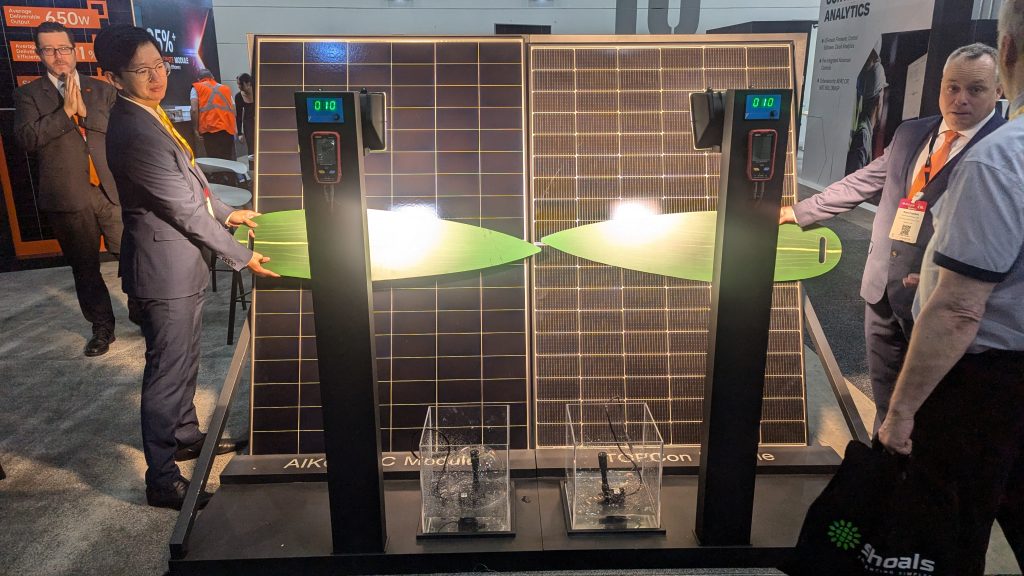
At the recent All Energy Australia exhibition, a wide array of new products and innovations in solar panels were showcased, with one company setting a new benchmark in efficiency. Aiko introduced a 480W panel in a roughly 1.7m x 1.1m size, achieving close to 24% efficiency and demonstrating impressive shade-handling capabilities, maintaining output even when partially shaded, as shown in the photos. I believe this Aiko panel will quickly become a favourite for our installations in the Ballarat region, especially for locations in forested areas where shading is a significant issue. In the past, we’ve used power optimizers with Jinko solar panels to achieve similar results, but the added cost and complexity of using optimizers increase overall expenses. For unshaded areas, Jinko panels remain the most cost-effective choice.
Solar Trends for Ballarat’s Climate
The latest solar panel trends are particularly favourable for Ballarat’s weather. New panels are now reaching an impressive efficiency of 23% in a compact size of 1m by 1.7m. One brand currently available is Aiko Solar Panels 470w, and it’s expected that others will soon follow suit. This is especially important for Ballarat, where winter presents a significant challenge for solar productivity. If you aim for energy independence during Ballarat’s winter months, the average household would need to install around 20kW of solar panels.
Solar Panel Sizing for Winter Energy Needs
A 20kW of solar panels might seem too large at first, but when we look at the numbers in the table below, we see that there are around 10 days with the equivalent of only one hour of full sunlight in July. Of course, it’s not literally one hour, but the energy produced is comparable to what we’d get from a single hour of full sun.
Energy Consumption and Household Requirements
Of course, we assume everyone needs 20kWh a day, but many places actually use less, typically below 16kWh, mainly because they rely on gas for hot water and heating. However, if a house is fully electric and has around 3-4 occupants, then 20kWh a day is definitely required.
Solar Panel Energy Production in Ballarat
| 2023 July dates | Production of 1kw of solar panels per day in July 2023 in Ballarat | Size of solar panels array to produce 20kWH/Day Ballarat |
| 1 | 3.6 | 6 |
| 2 | 2.7 | 8 |
| 3 | 1.5 | 13 |
| 4 | 1.1 | 19 |
| 5 | 0.8 | 25 |
| 6 | 0.7 | 28 |
| 7 | 3.4 | 6 |
| 8 | 2.4 | 8 |
| 9 | 3.9 | 5 |
| 10 | 0.6 | 33 |
| 11 | 0.8 | 26 |
| 12 | 0.4 | 52 |
| 13 | 0.8 | 26 |
| 14 | 3.9 | 5 |
| 15 | 3.9 | 5 |
| 16 | 2.5 | 8 |
| 17 | 0.9 | 23 |
| 18 | 2.9 | 7 |
| 19 | 1.1 | 18 |
| 20 | 3.6 | 5 |
| 21 | 2.7 | 7 |
| 22 | 3.9 | 5 |
| 23 | 3.0 | 7 |
| 24 | 2.4 | 8 |
| 25 | 2.8 | 7 |
| 26 | 4.1 | 5 |
| 27 | 3.0 | 7 |
| 28 | 1.1 | 18 |
| 29 | 3.6 | 6 |
Space Considerations for Solar Panel Installation
The next question might be, “Where can I fit around 40 solar panels?” This would require roughly 80 square meters. Yes, many houses may struggle to fit even half of that capacity, but I see plenty of homes in Ballarat that could potentially accommodate such an array. A common misconception is that panels must face north. While this is ideal, you can install them anywhere, including on a south-facing roof, and they will still generate energy.
Grid Export and Battery Storage
The next question would be where all this power should go, as sending it to the grid for 3 cents per kWh does not make any sense at all. When we refer to “sending it to the grid,” we’re talking about the process of transferring excess electricity generated by your solar panels back to the local power network, often in exchange for a credit on your energy bill. However, at such a low rate, you might consider alternative uses for your surplus power to maximize benefits. Obviously, the next discussion would be about battery storage, but for now, we are focusing on solar panels.
Limited Availability of Solar Panels in Ballarat
The availability of solar panels in Ballarat is often limited to what local electrical suppliers have in stock, without much consideration for what residents might actually be interested in. Understandably, many installers don’t have the time or resources to keep up with the latest trends until a particular product becomes the most easily accessible option.
Industry Standard Systems and Lack of Customization
Another issue is that installers often sell standard-sized systems without taking the time to assess individual needs and challenges. A typical setup with a 5kW inverter and 6.6kW solar panels has become the industry standard, dictated by utilities and Australian standards, with suppliers bundling these systems at the lowest possible price.
The Risk of Disappointment and Waste
As a result, many of the solar panels installed fail to meet customer expectations and could soon become obsolete, potentially ending up in landfills. This creates disappointment for consumers and poses a growing environmental concern.
Common Solar Panel Technologies and Consumer Perspective
The most common solar panel technologies today are PERC and bifacial panels. However, from the perspective of the end consumer, the specific technology isn’t as important. What matters most is the longevity and productivity of the system. Bifacial panels might be of interest in certain situations, such as ground-mounted or tilted installations, where they can boost energy output. Overall, most panels available on the market are of good quality, as long as they come from a well-established manufacturer.
Re-Energy is a local solar installer servicing Ballarat and surrounding regions.
We’re also listed on the Local Business Guide and Hotfrog for trusted local solar services
Recent Articles
Off-Grid Solar in Ballarat: Our System Design Principles
January 26, 2026

Solar batteries are taking off — what it means for Ballarat
September 5, 2025

Sigenergy Sigen Gateway as Switchboard — Ballarat info
August 29, 2025